Common Sense Needed in Academe More Than Common Core
 Educational practice has stood the test of time, over thousands of years, through trial and error. You might even say that there’s always been a common core of what worked, and what didn’t.
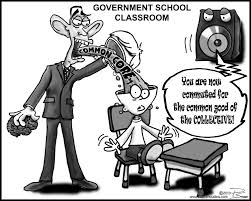
Progressives today feel that they can ignore the hard-won experience of the past, badmouthing and misrepresenting as needed to reform our way toward a new utopian world. Federal control of education in the hands of liberals conjures up ideological engineering and the laundering of tax revenue to achieve social activism. Policy is made in distant cities like DC, far from common sense local experience.
The educational model that seems best to fit today is based on the daycare center. Parents are both free to work and be all they can be, while their children are homogenized in government school systems during the day. The feel good equality bunny is the appropriate symbol for the common core. Tests are made simpler–or done away with all together. Gone is the motivating influence of imposing rigorous and demanding standards. Discipline has been turned into accommodation. Teachers must be entertaining to match the newly revised instructional materials. Books and writing (that is, two of the three Rs) are out, while the novelty and sensory stimulation of computer play become what looks like attention and engagement–but is more shallow and with less staying power.
 Tests aren’t liked because some students might actually fail. Is this unfair, then, to those who aren’t very smart, perhaps owing to disadvantages of heredity or upbringing, a nature-nuture locking-in of personality traits that can’t be overturned by expensive headstart-type government programs based upon food welfare, preschool play, and phony self-esteem building. In the past, one’s station in life mercifully provided a sense of emotional well being that enhanced all social predicaments. We almost have the same today, as upscale parents send their kids off to ivy league colleges to make sure that class advantages are kept intact, despite token admissions of young people from other walks of life (these students hustle to adapt without asking for social equality on their own terms).
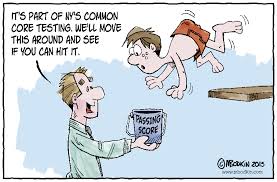
Making standardized tests easier and easier continues to be a misguided attempt to promote equality. Everybody passes–in the same way that social promotion guarantees a diploma. The proven experience of memorization is likewise under attack. Knowing names and dates has always furnished the educated mind, providing a convenient handle on deeper associations and connections. Isn’t it worthwhile for the beginning student to know what happened in 1492 in order to place incoming knowledge as before or after? Does the name of the first president really matter–or the current one?
Memorization, knowing names and dates, taking tests to measure what has been learned–these are badmouthed only through absurd exaggeration today. An anonymous online commentator has the mantra down pat: “the tests are BS. The data is useless. We need to move past memorization of names and dates and get to place where the education system invigorates a child or teen’s desire and interest to learn; trigger their curiosity. Otherwise they are memorizing facts and methods they will soon forget.” Really?
The emphasis on process and adeptness is a more important goal today. Critical thinking has been reduced to ideological narrowness. Students are taught to polish resumes and interview skills, those substance may be 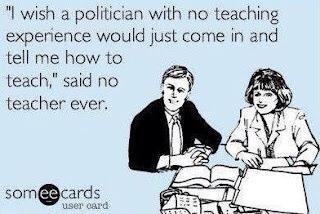 lacking. It’s a television world where uneducated actors can respond on cue.
In ages past, being called an “intellectual” meant having wide knowledge and deeper understanding. Students and faculty knew this implicitly. Sadly, the bureaucrats and politicians who control education today have few, if any, intellectuals as such in their ranks. The same holds for academic administrators and pedagogy-based faculty.


