Sioux Militant Robert Packard Says “NO” to Welfare
 Being too immersed in your native culture keeps people from seeing the forest for the trees. Novelist James Joyce had to leave his native Ireland for a sojourn in Switzerland to finally get a perspective on what was happening back home.
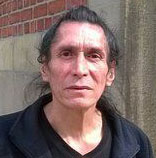
Similarly, Yankton Sioux tribal member Robert Packard left South Dakota several years ago with the US Army, but then decided to stay in the Berlin area as an expatriate artist, reminiscent of the “Lost Genenation” writers like Ernest Hemingway and Ezra Pound who settled in Paris after World War I.
The Germans, of course, already had a long-standing tradition of idealizing the American Indian in the works of men like Karl May, whose popular Winnetou novels (1890s) drew from even earlier French novels that praised the primitivism of life in the unadorned natural world, such as Chateaubriand’s novel Atala (1801) based on his North American travels.
European readers couldn’t get enough. America was about Indians, not about cowboys. Thoreau would have understood. Robert Packard stepped up to the German plate to satisfy this cultural appetite. But he soon found that being lionized as a minority celebrity isn’t the same as being given full-fledged acceptance.
As Berliner Seymour Gris has written in “Sioux Indian found guilty of Nazi salute,” Packard’s marginal status began to get worse as his former benefactors began to turn against him, causing him to lose his livelihood and means of daily support.
Packard’s feeble protest of using the Nazi salute against his enemies had momentarily forgotten that Germany today isn’t based on freedom of speech. Contrary political points of view can simply be made illegal. The law then can be selectively enforced–and is therefore arbitrary. “In America, there is something called the spirit of the law. This law was enacted to prevent the return of the Nazi party to power. I’m an American Indian,” he says. Forget about context if they want to bring someone down.
Despite being almost homeless in Berlin, Packard has refused all forms of public or Hartz IV welfare. “I’ve never taken a cent in government money in my life, and never will,” he says. Begun by former Chancellor Gerhard Schröder, Hartz IV has been criticized for promoting a demeaning form of welfare that keeps workers locked into low-paying jobs while simultaneously collecting public assistance.
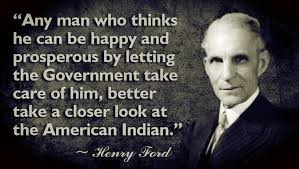 Packard suggests that he is in the forefront of emerging American Indian militants who believe that cultural salvation will only come once the onus of government dependency has been shed. Government has been the effective “caretaker” of tribes since their defeat in the nineteenth century. As Henry Ford once pointed out, things like poverty, alcoholism, joblessness are the continuing legacy of this welfare dependency.
Both Packard and Ford would likely agree with Ronald Reagan that “Government’s first duty is to protect the people, not run their lives.”



4 comments for “Sioux Militant Robert Packard Says “NO” to Welfare”